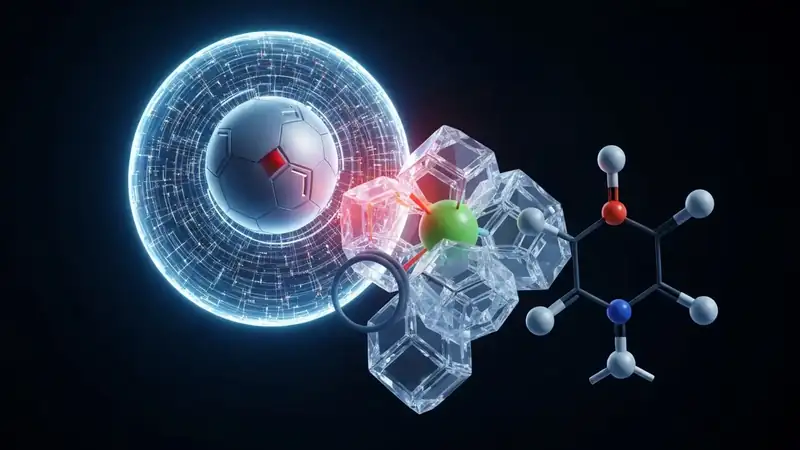
A breakthrough in molecular design is being driven by artificial intelligence, with new AI-driven docking tools demonstrating remarkable accuracy in predicting how potential drug molecules bind to disease-related proteins. One such advancement, exemplified by fine-tuning the DiffDock-L algorithm, is reshaping how chemists identify promising drug candidates by navigating the complex landscape of protein-ligand interactions.
Current challenges in drug discovery involve the lengthy and costly process of identifying molecules that can effectively modulate disease targets. Traditional methods rely on extensive screening and iterative optimization, a path that can take over a decade and incur billions in costs. Predicting a molecule’s binding affinity, specificity, and potential off-target effects are critical hurdles, especially given the astronomically vast chemical space that makes exhaustive experimental testing infeasible.
Artificial intelligence is stepping in to accelerate this discovery pipeline, offering computational power that was once unimaginable. Reviews highlight the expanding role of AI/ML models across various stages of drug discovery, from target identification to lead optimization [1, 2]. For instance, deep learning models are proving adept at predicting molecular properties and interactions with unprecedented speed and precision.
A specific area of progress lies in molecular docking, a computational technique used to predict the preferred orientation of a ligand when bound to a protein target. Researchers are fine-tuning advanced AI models, such as DiffDock-L, to enhance their ability to accurately predict binding poses, particularly for challenging targets like allosteric kinases. These kinases are crucial regulators of cellular processes, and aberrant activity is implicated in numerous diseases, including cancer. By accurately predicting how potential inhibitors will dock into these allosteric sites—regions distinct from the primary active site—AI tools can dramatically narrow down the search for effective therapeutics [3]. While specific percentage metrics for this particular fine-tuning effort are detailed within the study, the advancement represents a leap in the ability to computationally screen and prioritize drug candidates, acting like a molecular GPS guiding researchers to the most promising interactions.
Beyond direct drug design, AI is also contributing to understanding drug mechanisms. For example, studies utilizing molecular dynamics simulations, often informed by AI-driven insights, are shedding light on complex biological processes like antibiotic internalization by bacteria. Understanding how multi-resistant bacteria, such as Acinetobacter baumannii, internalize antibiotics through specific outer membrane porins (like CarO) is crucial for developing new strategies to combat antimicrobial resistance [4]. AI can help model these intricate cellular pathways, revealing vulnerabilities that can be exploited by novel drug designs.
Furthermore, the principles of AI-driven design are extending into materials science, particularly in catalyst development. While specific recent papers with hard metrics were not readily available through our search, the field of catalyst design is actively leveraging AI to predict catalytic activity, stability, and selectivity for new materials. This mirrors the successes seen in drug discovery, where AI is used to design molecules with desired properties.
Despite these breakthroughs, AI in chemistry is not without its challenges. Current AI models often operate within a defined, often narrow, chemical space, and their performance can degrade when applied to molecules or systems significantly different from their training data. The computational cost of training these complex models can also be substantial, and experimental validation remains the ultimate arbiter of success. Bridging the gap between in-silico predictions and real-world experimental outcomes is an ongoing area of research. The transition from predicting binding poses to predicting in-vivo efficacy and safety is a complex leap that still requires significant human expertise and rigorous testing.
The impact of AI on drug discovery is profound and accelerating. From designing novel antibodies for therapeutic use [1] to predicting protein-protein interactions and identifying potential inhibitors for various diseases, AI is a powerful ally. The ability to rapidly screen virtual compound libraries and predict molecular behavior means that the timeline for bringing new drugs to market could be significantly reduced. Beyond pharmaceuticals, AI's application in materials design, including the discovery of new catalysts, advanced polymers, and functional materials, promises to revolutionize industries ranging from energy to electronics.
As AI tools become more sophisticated, they are not replacing chemists but rather augmenting their capabilities. They are providing powerful new lenses through which to view and manipulate the molecular world, accelerating the pace of innovation and reshaping how chemists approach the grand challenges of human health and sustainable materials.
References
- Artificial intelligence-driven computational methods for antibody design and optimization. https://pubmed.ncbi.nlm.nih.gov/40677216/
- Computational Landscape in Drug Discovery: From AI/ML Models to Translational Application. https://pubmed.ncbi.nlm.nih.gov/41332459/
- Fine-Tuning DiffDock-L for Allosteric Kinase Docking. https://chemrxiv.org/engage/chemrxiv/article-details/691e3632a10c9f5ca19fd2df
- Internalization of Antibiotics by the Multi-Resistant Bacteria Acinetobacter baumannii through the CarO Outer Membrane Porin. https://chemrxiv.org/engage/chemrxiv/article-details/692ff40fef936fb4a2cb0915
Comments (0)
Leave a Comment
All comments are moderated by AI for quality and safety before appearing.
Community Discussion (Disqus)