Source Verification Pending
This article passed our quality control checks, but the sources could not be independently verified through our Knowledge Graph system. While the content has been reviewed for accuracy, we recommend verifying critical information from primary sources before making important decisions.
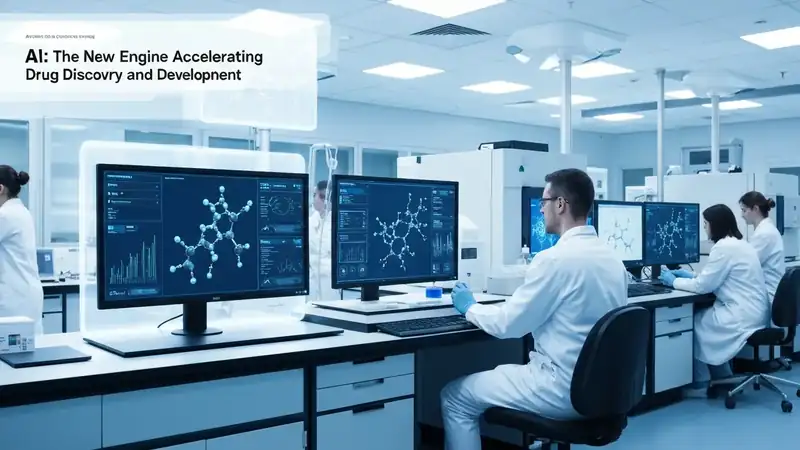
AI is no longer science fiction; it's a powerful engine driving the next wave of medicine. New research shows AI is dramatically speeding up the discovery of life-saving drugs. This could mean faster treatments for diseases that once seemed incurable.
Developing new drugs is a marathon. It's incredibly slow, immensely expensive, and fraught with failure. Scientists spend years in the lab, chasing leads that often fizzle out. The traditional drug discovery pipeline is a bottleneck, delaying critical therapies for patients in desperate need.
This lengthy process means diseases like cancer, Alzheimer's, and rare genetic disorders continue to challenge medical science. The high failure rate in clinical trials further exacerbates the problem, costing billions and setting back progress. There's an urgent need for tools that can accelerate this process and improve success rates.
Artificial intelligence is stepping in as a game-changer. It's revolutionizing how we find and design new medicines. Computational methods are now crafting antibodies with unprecedented speed and precision. These AI-designed antibodies are tailored to target specific diseases, cutting down the laborious trial-and-error of traditional methods [Vecchietti LF et al., mAbs 2025, PMID: 40677216].
Large Language Models (LLMs) are also proving invaluable. These advanced AI systems can sift through vast amounts of scientific literature, generating novel hypotheses and identifying potential drug candidates. This capability tackles the sheer complexity and cost of drug discovery, offering new avenues for treatment development [Chakraborty C et al., Journal of advanced research 2025, PMID: 39952319].
Beyond discovery, AI is optimizing the very delivery of therapies. Machine learning is guiding the design of sophisticated delivery systems for gene therapies. This ensures genetic material reaches its target effectively, a crucial step for the success of these cutting-edge treatments [Hutchinson JA et al., Advanced drug delivery reviews 2025, PMID: 41297827]. Even complex targeted therapies like Antibody-Drug Conjugates (ADCs) are benefiting. AI is rationalizing the intricate matching of antibodies, linkers, and drug payloads, aiming to improve efficacy and reduce toxicity in cancer treatment [Wang Y, Guo C, Li W, Trends in pharmacological sciences 2025, PMID: 41219042].
Furthermore, AI is streamlining the often-painful process of clinical trials. By improving trial facilitation, AI can help accelerate the journey from lab discovery to patient bedside. This is particularly relevant for complex conditions like Inflammatory Bowel Disease (IBD), where efficient trials are critical for developing better patient care [Le Berre C et al., Clinical gastroenterology and hepatology : the official clinical practice journal of the American Gastroenterological Association 2025, PMID: 40220847].
While the promise is immense, challenges remain. These AI models often require massive, high-quality datasets to learn effectively. The "black box" nature of some complex AI algorithms means understanding exactly why a prediction is made can be difficult. Researchers caution that in silico (computer-based) predictions still need rigorous validation through laboratory experiments and human trials [Chakraborty C et al., Journal of advanced research 2025, PMID: 39952319]. Integrating these powerful AI tools into existing R&D workflows also presents a significant hurdle for many pharmaceutical companies.
This AI revolution means faster access to novel therapies. Patients could see new treatments for previously untreatable diseases emerge years sooner than before. Doctors gain more precise tools for designing targeted therapies like ADCs and optimizing gene delivery systems. Clinical trials are set to become more efficient, reducing costs and increasing the likelihood of successful drug approval.
The trend is clear: AI will become an indispensable partner in drug discovery. We can expect even more sophisticated AI models capable of predicting drug interactions, personalizing treatments, and even designing entirely new classes of medicines. The main challenge ahead is ensuring regulatory bodies keep pace and that these AI-driven discoveries are thoroughly validated for safety and efficacy before reaching patients.
The race to cure disease just got a powerful new ally. AI is transforming the landscape of medicine, ushering in an era of faster, smarter drug development. The question is no longer if AI will change medicine, but how quickly and how profoundly.
Comments (0)
Leave a Comment
All comments are moderated by AI for quality and safety before appearing.
Community Discussion (Disqus)